

Ashwagandha, without the Instagram voice
Not the reel version. What the root actually is, what the trials actually measured, and the 1 am questions people type into Google but never ask their doctor out loud.
What Ashwagandha Really Is
Ashwagandha comes from the root of Withania somnifera, a small shrub that grows across dry parts of India, including Madhya Pradesh, Rajasthan, and Gujarat. The name is descriptive, not poetic; "Ashwa" means horse, "gandha" means smell, a nod to the root's earthy, pungent odour and the old belief that consuming it gives you the strength and stamina of a horse.
In Ayurveda it sits under Rasayana, herbs used less for treating one specific disease and more for building resilience over time, closer to a long-game tonic than a quick fix. The compounds behind most of its effects are called withanolides, and how much of these you're actually getting depends heavily on whether you're using raw root powder from your local kirana store or a standardised extract like KSM-66 or Sensoril, which is what most clinical trials test.
What The Research Actually Shows
Ashwagandha is one of the few Ayurvedic herbs that's been through a genuine amount of modern clinical testing, not just tradition.
→ Sleep improves alongside stress
Several of the same trials tracked sleep as a secondary measure, and people fell asleep faster and woke up less through the night; likely a downstream effect of lower cortisol rather than the herb acting as a direct sedative.
→ Focus and memory, in smaller doses of proof
A few 8-week studies found better attention, reaction time, and recall with regular use; part of why it's now marketed at students and working professionals as much as stressed adults.
→ Male fertility and testosterone, said plainly
This is the one people whisper about rather than ask directly. Testosterone rose by roughly 17% alongside the sperm improvements above. The likely mechanism isn't magic; chronic stress genuinely suppresses reproductive hormones, and lowering that load lets the body's own signalling recover.
The Questions Nobody Asks Out Loud
This is the part that rarely gets written honestly, so here it is, in plain language.
Will it make me fat, or help me gain weight?
A very Indian question, because ashwagandha has been sold for decades as a weight gain churna for underweight kids, brides-to-be, and anyone told they look "kamzor." A 2023 meta-analysis of 12 clinical trials found no meaningful weight gain effect from the herb itself. If anything, one Indian trial with 60 overweight men taking 300 mg twice daily for 8 weeks found participants lost around 2.5 kg of body fat while gaining nearly 1.9 kg of lean muscle; better body composition, not a heavier number on the scale. If you're taking a traditional churna mixed generously with ghee, milk, and sugar for weight gain, the ghee and sugar are doing most of that work, not the root powder.
Does it actually help with performance and testosterone, or is that just marketing?
The sperm and testosterone data above is real and published, not a WhatsApp forward. But it works over weeks through stress reduction and hormonal recovery, not through some steroid-like mechanism. Anyone promising overnight results is selling you something else entirely.
Is it safe while trying to conceive, pregnant, or breastfeeding?
No. This is the one area where advice stays consistently conservative. Human safety data during pregnancy is thin, and most obstetricians and Ayurvedic doctors alike recommend avoiding it while pregnant, breastfeeding, or actively trying to conceive. That caution applies to women taking it themselves; it's unrelated to the male fertility use case above.
Will it mess with my thyroid?
If you have hypothyroidism, one clinical trial found ashwagandha raised T3 by around 41% and T4 by nearly 20% over 8 weeks, which can genuinely help; but only under a doctor's watch, since your medication dose may need adjusting alongside it. If you have hyperthyroidism or Graves' disease, skip it. An already overactive thyroid doesn't need a herb nudging it further.
Can I take it during my period?
There's no specific medical reason to avoid it during your period. This is one of those inherited cautions applied to almost every herb without much basis. The real concern is pregnancy, not menstruation.
Will it make me sleepy and dull, or is it safe before exams?
At normal doses, most people don't feel foggy on it. Students often take it specifically because it takes the edge off exam stress without the daytime drowsiness. A small number of people do feel sleepy, in which case shifting the dose to night usually fixes it.
Is this basically a substitute for quitting smoking or drinking?
No, and any product claiming that outright is overpromising. What ashwagandha genuinely does inside de-addiction formulas is take the edge off the anxiety, irritability, and craving spikes that make quitting so hard in the first place, making willpower easier to hold onto during withdrawal. It works alongside a quit attempt, not instead of one.
Who Should Be Extra Careful
Pregnant, breastfeeding, or actively trying to conceive
Diagnosed with hyperthyroidism or Graves' disease
Living with an autoimmune condition such as lupus, rheumatoid arthritis, or Hashimoto's; ashwagandha can stimulate immune activity
On sedatives, sleep medication, or anti-anxiety prescriptions
On diabetes or blood pressure medication, since ashwagandha can nudge both downward
Scheduled for surgery in the next two weeks
Taking very high doses for months without a break; a small but real number of documented liver strain cases follow exactly this pattern
None of this makes the herb dangerous for the average adult. It just means, like anything that actually does something in the body, it deserves a five minute conversation with a doctor rather than a decision made purely off a reel.
How People Actually Take It
The traditional route
A spoon of ashwagandha churna stirred into warm milk at night, often with a bit of ghee or honey; still common in many Indian homes.
The clinical route
Most trials use a standardised root extract, commonly KSM-66 or Sensoril, dosed between 300 and 600 mg a day, either as one dose or split morning and evening.
Morning vs. evening
Morning dosing tends to suit people using it for daytime focus and stress resilience. Evening dosing, closer to dinner, tends to suit people using it mainly for sleep.
Timeline and pacing
Most benefits show up gradually over 4 to 8 weeks of consistent use, not overnight, and most practitioners suggest a short break every couple of months rather than staying on it year round without pause.
Where This Already Lives Inside PanchAura
Here's the strange part. Ashwagandha quietly sits inside more of our formulas than almost any other single herb, and until now it never got a post of its own.

Brain Booster
A nutrition drink for exam season, work deadlines, and general overthinking; ashwagandha working alongside Brahmi.
View product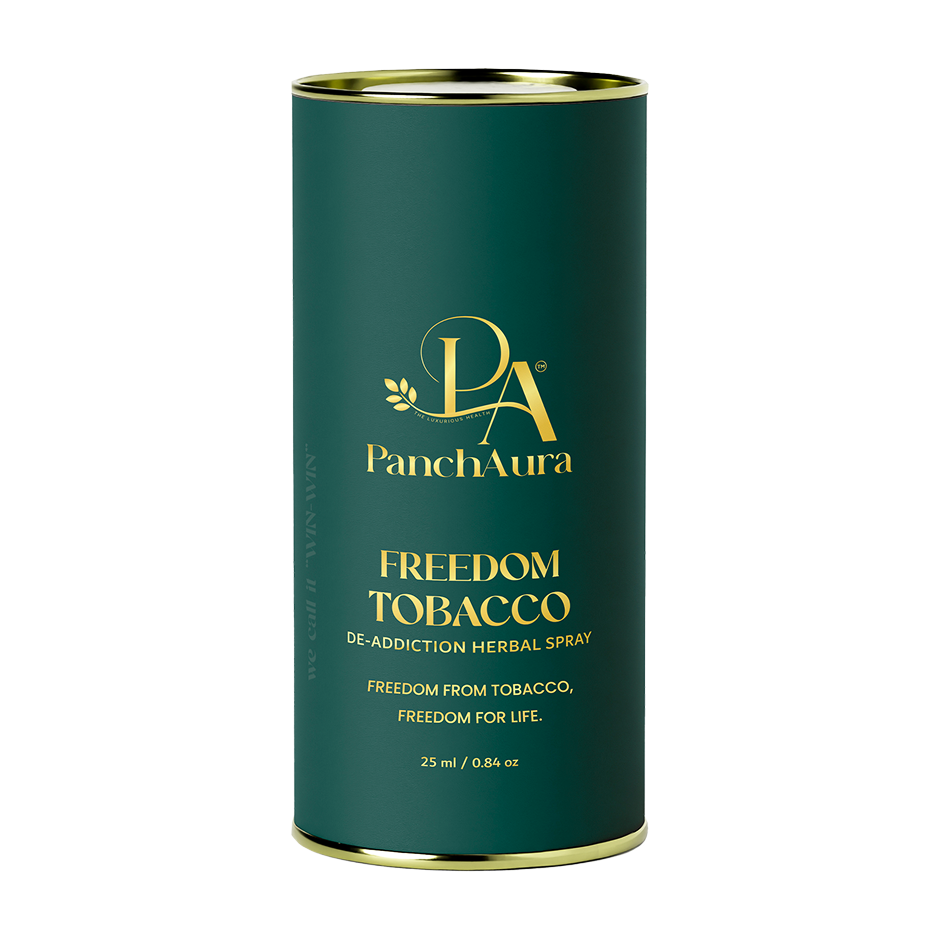
Freedom
Ayurvedic de-addiction and anti-craving spray for quitting tobacco, gutka, or paan masala; eases the anxiety that derails a quit attempt.
View product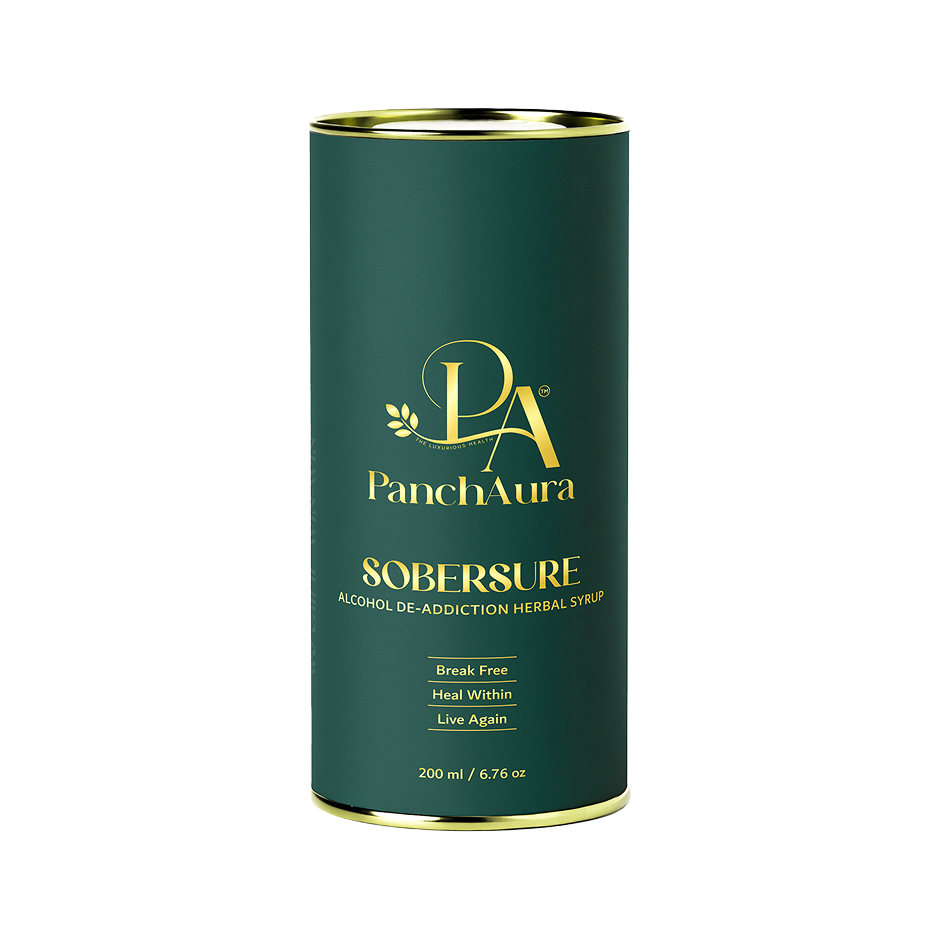
Sober Sure
Ayurvedic support for reducing alcohol cravings, for yourself or a family member; the same stress-lowering role, different craving.
View productThe Honest Bottom Line
Ashwagandha isn't snake oil, and it isn't a miracle root either. Taken consistently and sensibly, it's a stress-lowering adaptogen that can meaningfully lower your cortisol, help you sleep, and support your body's own hormonal balance. Your dadi wasn't wrong about the warm milk; she just never had to explain the biology behind it.
Explore PanchAura formulas